What Is an Insurance Ecosystem? A Simple Explanation


Insurance Isn't Just One Company. It's a Whole Network.
Most people think of insurance as one thing: you pay a company, and if something bad happens, they pay you back. That's true, but it's only the part you actually see. Behind that one payment, there's a whole network of people and businesses working together to make it happen, and that network is what people mean when they say "insurance ecosystem."
Think of it like a hospital. When you go in for treatment, you only really interact with your doctor. But behind that one doctor, there's a pharmacy, a lab, a billing department, an ambulance service, equipment suppliers, and insurance staff, all doing their own separate jobs, all connected to make your treatment actually work. An insurance ecosystem is the same idea. The company whose name is on your policy is just the doctor you see. Everyone else is working behind the scenes.
Who's Actually in an Insurance Ecosystem
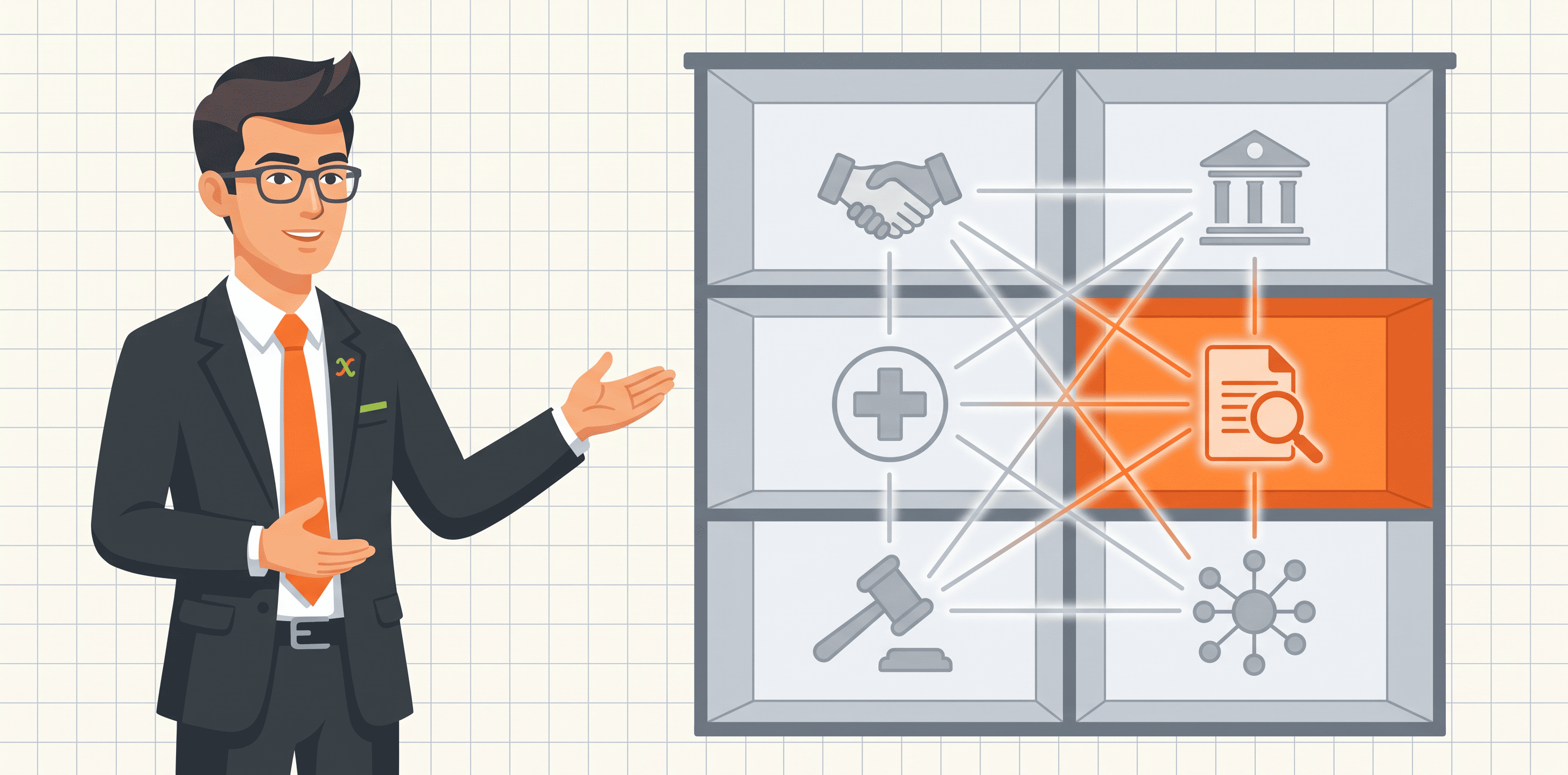
Here's who's usually involved, in plain terms.
The insurer
The company that actually takes on the risk and promises to pay if something goes wrong. This is the name on your policy, but it's rarely the only company involved in getting you covered or getting your claim paid.
Agents and brokers
The people who help you actually choose and buy a policy, explaining what's covered, what isn't, and which option fits you. Some work for one insurer, others compare policies across several.
Banks and other distribution partners
Increasingly, insurance gets sold through places you already visit for something else, your bank, a retailer, even a ride-hailing app. This is called bancassurance when it's a bank, but the same idea applies anywhere insurance gets bundled into another everyday service.
Aggregators and comparison platforms
Websites and apps that let you compare multiple insurers' prices and coverage side by side, rather than shopping company by company.
Hospitals, garages, and repair networks
The people who actually deliver on the promise. A hospital treating a covered patient, a garage repairing a covered car, these are the service providers your claim actually pays for.
Claims handlers and investigators
The people, or increasingly the software, who check that a claim is genuine, calculate what should be paid, and process the payout, sometimes for the insurer directly, sometimes for a third party the insurer contracts to do this work.
Reinsurers
Insurance for insurance companies. When an insurer takes on a very large risk, it often shares that risk with a reinsurer, so one very large claim doesn't put the entire company in trouble.
Regulators
The referee. In India, that's IRDAI, setting the rules every other player in the ecosystem has to follow, from how policies are sold to how quickly claims must be settled.
Technology providers
The platforms and software connecting all of the above, so a policy sold by a broker, serviced by an insurer, and paid out by a claims team can actually move between all three without getting lost in translation.
Why This Matters More Than It Used To
None of this is new, insurance has always involved multiple parties. What's changed is how connected they need to be. A customer today expects to buy a policy in minutes, get a claim answered in hours, and not have to explain their situation five times to five different people. That only works if every player in the ecosystem, the insurer, the broker, the bank, the hospital, the claims handler, is actually working off the same, current information, instead of five different spreadsheets and email threads.
That's the specific problem Mozart Suite is built to solve. Instead of the insurer, its partners, and its claims teams each running on their own disconnected system, Mozart connects them: Distribution Pro for agents, banks, and aggregators selling the policy, Underwrite Pro for the insurer's own decision-making, Claims Pro and Investigate Pro for the claims side, and DataSuite keeping all of it in sync in real time. The ecosystem itself isn't going away, it's how insurance has always worked. What changes is whether the different players in it can actually talk to each other, or whether the customer is left doing the talking for them.
If you're trying to make your own part of this ecosystem easier to connect, get in touch and we'll walk through what that looks like for your business.
.png)

.svg)